

Cat tree placement in small apartments
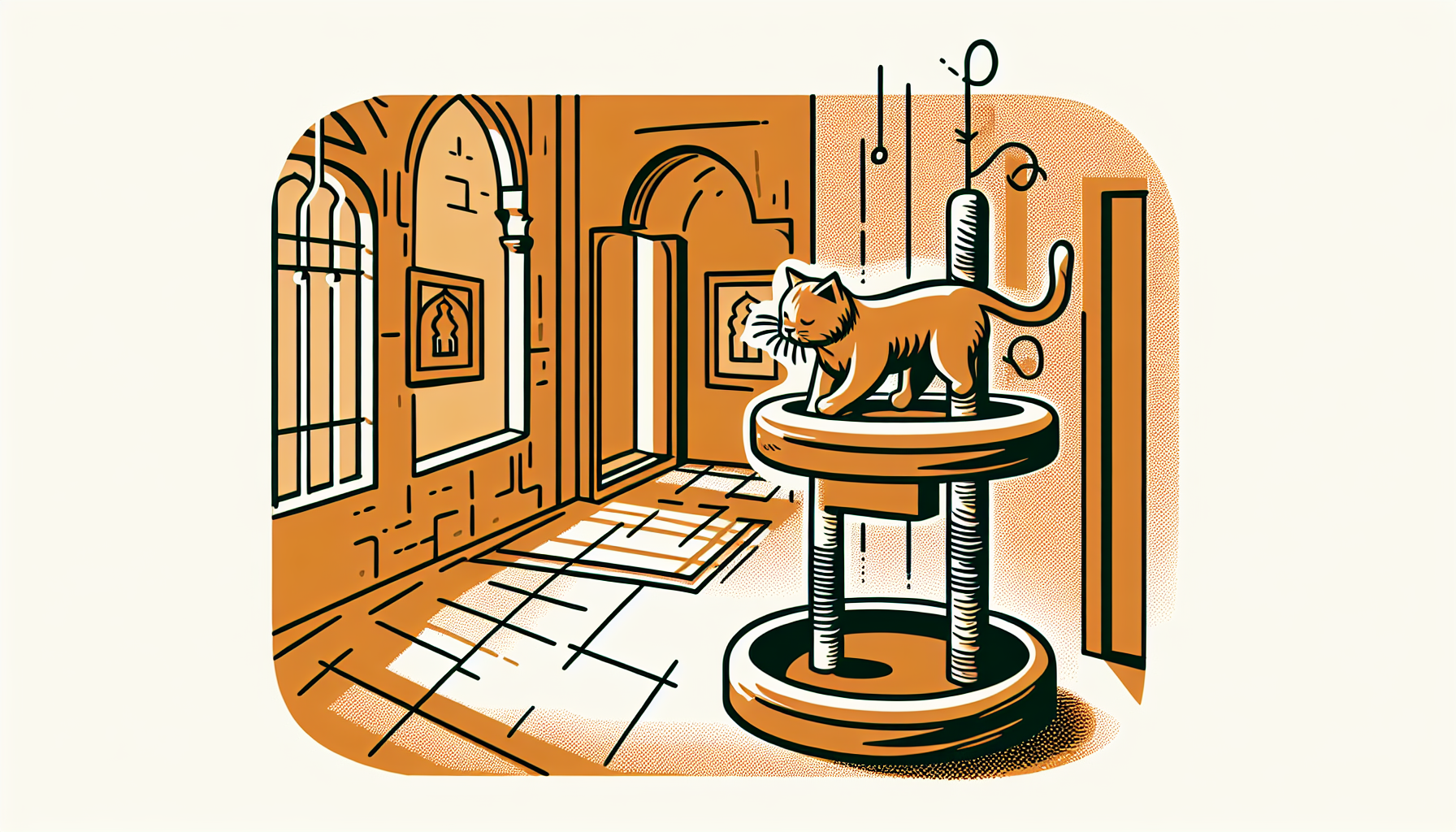
In urban apartments with limited space, the correct placement of the cat tree determines whether an indoor cat can climb, watch and rest sufficiently. Especially in small apartments of around 35-70 m², vertical zones help to reduce territorial conflicts and protect furniture. With a clever combination of window seats, quiet retreats and safe jumping routes, the available space can be used more efficiently - without compromising on stability, hygiene and appearance.
TL;DR - The most important facts in brief
- Cat tree placement along natural walkways and close to windows creates activity and reduces stress.
- Quiet corners without draughts are preferable to sleeping areas; keep the litter tray and litter box about 2-3 m apart as a guide.
- In small apartments, ceiling-high scratching posts, wall-mounted scratching posts and modular systems are suitable for using height instead of floor space.
- Stability is a priority: solid base plates, wall brackets and regular screw checks prevent wobbling and noise.
- Observe Swiss special features: House rules in rental properties, consideration for neighbors, requirements of the Animal Welfare Ordinance (TSchV) for species-appropriate occupation.
- For multi-cat households: plan several ascents and descents, alternative rest areas and privacy to avoid competition.
Why is the placement of the cat tree important?
Cats structure their territory into activity zones (hunting/playing), observation zones (view) and resting areas (sleeping, grooming). The cat tree placement must cover these needs and at the same time take into account the limited floor plan of a small apartment. Positions with a good view promote well-being; however, places that are too exposed near loudspeakers, TVs or passageways can lead to avoidance behavior. A cleverly chosen corner offers protection at the back and a view of the room and windows - ideal for safe, elevated places.
In Switzerland, there are additional factors: in densely populated apartment buildings, vibrations are easily transmitted through concrete ceilings. A wobbly cat tree can therefore amplify noises. Solid mounting, felt or cork pads and placement close to the wall reduce noise - in the interests of good coexistence with the neighbors and the house rules.
Practical tip: The main traffic in the living area is easy to recognize: Where the cat walks along several times a day and where people often sit. This is exactly where an observation point at window sill height or higher is worthwhile.
Which locations work best in small apartments?
Window seats with a view

A cat tree by the window makes use of natural curiosity. Birds, trees and street lighting provide stimuli without taking up extra space. A minimum distance of approx. 20-30 cm from the window pane prevents condensation and draughts on cold days. In rented apartments with radiators under the window, moving them to the side by approx. 30-40 cm ensures better heat distribution.
Protective room corners
Corners provide safety at the back and save floor space. Here, the cat tree can be positioned in such a way that the entrance and exit do not fall directly into the doorway. For corners near doors, an offset of approx. 50-60 cm is advisable so that doors swing freely and do not frighten the cat.
Quiet niches instead of passageways
Corridors and passageways are rarely ideal because hectic movements can lead to conflicts. Niches behind sofas or between cupboards and walls are better, as long as there is at least 80 cm of space to move. This creates visual contact with the room without constant traffic directly at the trunk.
Bedroom as a quiet zone
The bedroom offers a quiet alternative for sensitive cats. Ideally, the sleeping den should not be above head height of the bed to reduce nocturnal disturbances. A distance of approx. 2-3 m from the litter tray remains - as a guide - hygienically sensible.
Balcony - only secured
A weatherproof scratching post or climbing wall on the balcony provides an exciting attraction, provided the area is cat-proof (e.g. with glazing or netting) and complies with licensing requirements. Depending on the municipality and landlord, structural changes must be agreed in advance. Non-slip mats and UV-resistant materials increase safety and longevity.
How to choose the right type: ceiling-high scratching post, wall-mounted scratching post or modular?
Small areas benefit from vertical solutions. Ceiling-high scratching posts use room heights of approx. 240-260 cm (typical ceiling height in many Swiss homes) and remain stable thanks to the spreader mechanism or ceiling panels. Wall-mounted scratching posts and shelving systems create walkways over doors and cupboards. Modular systems adapt to changes in floor plan and are scalable for multi-cat households.
Advantage: A wall-mounted scratching post above sofa height connects the favorite resting place and window in one line. This creates a "high path" and relieves pressure on the floor - perfect for small apartments and studio floor plans.
Challenge: Lightweight lightweight walls do not bear every load. Check the load-bearing capacity and use suitable dowels; if in doubt, plan to distribute the load over wooden planks or use ceiling-high systems.
Step-by-step: Optimal cat tree placement
- 1 Scan the room: Map windows, radiators, doors, sockets and walkways. Pay attention to draughts and direct sunlight.
- 2 Check the corner position: Saves space and increases stability; allow approx. 2-4 cm clearance from the wall for skirting boards.
- 3 Use height: Choose a ceiling-high scratching post or wall-mounted scratching post. Set jumping distances between lying surfaces at approx. 35-45 cm (orientation value).
- 4 Plan paths: No dead ends. Provide at least two ascents or descents, e.g. sofa → intermediate board → sleeping hollow.
- 5 Decouple the subfloor: Felt or cork pads under the floor panel. This will noticeably reduce vibrations and noise for neighbors.
- 6 Test safety: wobble test, tighten all screws, set wall brackets. Check that jump paths are free of hanging plants or lamp cables.
- 7 Promote acceptance: Use catnip or silver vine (cat-friendly) sparingly for the first few days, place favorite blanket in the cave.
- 8 Maintain routine: Vacuum sisal scratching surfaces weekly, shorten loose fibers, wash lying surfaces - hygiene supports long-term use.
Distances and dimensions: practical guide values
The smaller the home, the more important it is to have reliable guidelines. The following values are guidelines and may vary depending on the cat, its age and fitness.
Material and safety issues in Swiss rental and owner-occupied apartments
Stability, noise protection, neighborhood

Solid base plates, concealed wall brackets and anti-slip pads prevent tipping moments. In apartment buildings, carpet islands minimize vibrations. Noise peaks often occur when jumping off - a soft landing surface in front of the cat tree effectively absorbs the impact and protects the floor, especially with parquet flooring.
Fastening and structural consideration
Wall scratching posts belong on load-bearing walls. Masonry and insulation vary depending on the year the house was built. In rented apartments, it is advisable to consult with the landlord; smaller holes can usually be professionally closed when moving out. When using balconies, many municipalities have clear rules for nets and glazing - informing yourself in advance saves trouble.
TSchV and species-appropriate occupation
The Animal Welfare Ordinance (TSchV) requires cats to be kept in a way that allows them to be occupied and to retreat. For indoor cats, this means: scratch-proof areas, climbing and lying areas on several levels and visual contact with the outside, if possible. The placement of the cat tree is therefore a central component of species-appropriate indoor keeping.
Multi-cat households and farmhouse apartments: what to consider?
With two or more cats, the importance of redundant routes increases. Each main platform should offer at least two alternative entrances and exits. In compact homes, wall modules that form a circular path are suitable so that lower-ranking animals can escape. In rural households with access to a stable or barn, the indoor cat tree can serve as a "check-in zone" near the window or patio door - a robust scratching post intercepts arrival energy and protects furniture.
For families with children: the upper area of the cat tree remains cat-exclusive. Clear arrangements prevent unintentional lifting and prevent falls. Non-slip carpets and clear paths prevent collisions in everyday life.
Care, hygiene and longevity: how to keep the cat tree attractive
Treat sisal, wood and textiles correctly
Sisal trunks last longer if loose threads are trimmed cleanly. Removable covers can be washed at 30-40 °C (follow manufacturer's instructions). Wooden surfaces remain non-slip with mild cleaners; oil-based care products should be used sparingly to avoid the risk of slipping. Odorless cleaning routines support long-term acceptance.
Seasonal adjustments
In summer, direct sunlight can heat up sunbathing areas - an offset position or a light curtain can help. In winter, a small distance from the radiator improves the room climate around the scratching post. If pollen is flying, regular vacuuming of the textile surfaces helps to reduce allergens.
Common mistakes when placing a cat tree - and better alternatives
- Too close to loud appliances: Washing machine, subwoofer or TV are distracting. Alternative: quiet corner with line of sight to the room.
- Dead-end design: only one ascent causes stress. Alternative: plan a second ramp or jump over sofa.
- Wrong height: Too much distance is a deterrent. Alternative: Stagger levels closer together (approx. 35-45 cm).
- Unstable surfaces: Wobbling reduces acceptance. Alternative: heavy floor panel, wall brackets, felt pads.
Tip for small studios: A wall-mounted scratching post above a sideboard line creates a continuous high path without taking up additional floor space - ideal for 1-room apartments.
Mini case studies from practice
Old building with 260 cm ceiling height, 2 cats
A ceiling-high scratching post in the corner of the room, supplemented by two wall boards up to the window, enabled separate paths for both animals. Result: fewer conflicts at the window, much more frequent use of the upper platforms.
New building with underfloor heating, 45 m²
Because there were no radiators, the cat tree initially stood directly by the window and was heated by the sun. An offset of approx. 60 cm plus a light curtain noticeably lowered the surface temperature - the lounging areas were used permanently again.
Conclusion: How to place a cat tree in small apartments
The ideal cat tree placement combines overview, safety and peace and quiet. Corners close to windows, several ascents and descents and low-vibration installation are the success factors in small apartments. Ceiling-high or wall-mounted systems allow the room height to be utilized, while felt pads and clever path planning minimize noise and conflicts. If you also keep the TSchV principles, house rules and neighborhood in mind, you can create a lasting win-win situation for the cat, family and environment.