Cutting your cat's claws - safe instructions for at home
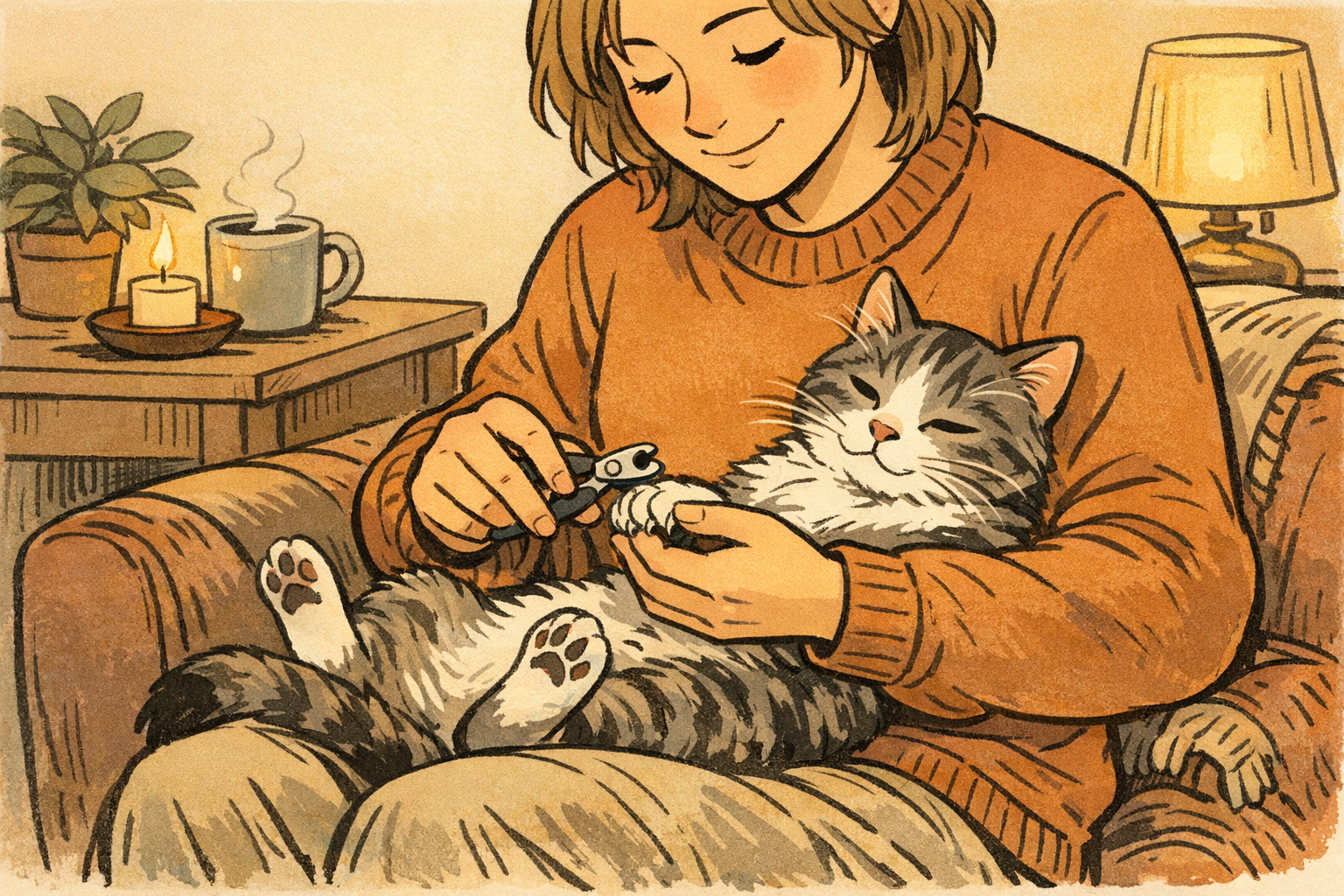
Many cat owners know that sharp claws can damage furniture, skin and nerves - but are unsure whether and how they can do something about it themselves. At the same time, they don't want to cause their cat any pain or risk unnecessary surgery at the vet. In this guide, you will learn how to trim your cat's claws at home safely, in compliance with animal welfare regulations and with minimal stress, when it really makes sense to do so, what mistakes you should avoid and in which cases a trip to the vet or cat groomer is the better choice.
Table of contents ▼
- Claw trimming is particularly useful for indoor cats, senior citizens and sick animals if the claws are too long or curled.
- Only cut the transparent tip and keep sufficient distance from the pink nerve area (life).
- Work calmly, with good light and suitable claw scissors - without force and in several stages if necessary.
- Professional help is the safer choice if the cat is unsure, has black claws, is bleeding or is showing strong resistance.
Why trim your cat's claws at all?
Claw trimming in cats makes sense if the claws cause problems in everyday life: for example, if they get caught in blankets, curl into the pads or the cat "clicks" audibly on smooth floors. Especially indoor cats, older animals or cats with joint problems use scratching posts and natural wear and tear less efficiently. The aim is never to make the claws completely short, but to prevent painful overlengths and reduce the risk of injury to people, animals and furniture.
Outdoor cats on farms or in rural areas use trees, wood and hard surfaces and often do not need their claws trimmed at all. The situation is different in a city apartment in an apartment building: Little natural wear and tear, sensitive floors and close quarters often make well-groomed claws a pragmatic compromise between cat health and quality of living.
Trimming your cat's claws: safe step-by-step instructions
To trim your cat's claws safely at home, you need a quiet environment, good lighting, sharp claw scissors or a claw trimmer and a little patience. Only trim the transparent tip and always keep your distance from the pink area where blood vessels and nerves run. It is better to work in short stages, reward your cat and stop when it is visibly uncomfortable - safety and confidence come before perfection.
The following step-by-step guide is intended for healthy, cooperative cats. If your cat shows strong fear, reacts aggressively or already has problems with its claws (e.g. inflammation, ingrown claws), seek veterinary advice first.
Choose a quiet place without a hectic pace, ideally after a meal or a play session. Have claw clippers, a blanket or towel, treats and, if necessary, a second person ready. Make sure you have good lighting so that you can clearly see the pink area inside the claw.
Sit comfortably and hold the cat on your lap or place it on a non-slip surface. Many cats feel safer leaning sideways against your body. Hold the cat gently but firmly, without restraining or pushing it, so that it does not panic.
Take a paw in your hand and press lightly on the ball of the toe with your thumb and forefinger until the claw becomes visible. Look at the claw in the light: you will see a clear, transparent tip at the front and a pink core behind it, which you must not damage.
Position the claw scissors at a right angle to the claw and only cut off the transparent tip - one to two millimetres is often enough. It is better to cut a small piece twice than too much once. Avoid jerky movements and talk calmly to your cat.
After each claw, check that everything looks dry and inconspicuous. Take a short break after a paw or end the session if your cat becomes restless. Reward them with a particularly tasty snack or game - this way they will associate the claw trimming with something positive.
For Swiss indoor cats, a good basis of scratching opportunities is worthwhile in addition to claw trimming: high-quality scratching posts, horizontal sisal mats and scratch-resistant lying areas help to extend the intervals between trims and to live out natural scratching behavior.
- Sharp cat claw scissors or nippers, not blunt human nail clippers
- Good light to clearly see the pink area (life)
- Calm, relaxed cat - no rush, no time pressure
- Only trim the transparent tip, never cut deeper "on suspicion"
- Have hemostatic powder or clean cloth ready in case of emergency
- Several short sessions are better than one long fight
If you keep several cats, it is best to trim their claws one after the other and not directly after each other in the same room if one cat has reacted very stressed. Animals take on moods - peace and quiet in the household makes handling much easier.
When to trim yourself - and when not to?
Whether you should trim your cat's claws yourself depends on its attitude, state of health, temperament and your own abilities. In many Swiss homes, careful trimming at home makes sense, especially for calm indoor cats and senior pets with poorly wearing claws. However, for very anxious, aggressive or unhealthy cats, the veterinary practice or an experienced specialist is the much safer solution.
The following classification helps with orientation:
When claws should usually be trimmed
Typical candidates for regular claw trimming are indoor cats, old cats, animals that are overweight, have arthritis or neurological problems and cats whose claws are already visibly too long or curl up. Even in apartment buildings with parquet or vinyl floors, trimming can help to reduce loud "clacking" when walking and scratching marks without severely restricting the cat's natural behavior.
When it is better not to cut yourself
Home claw trimming is unsuitable if your cat has black or very dark claws and you do not recognize its life, if there is already bleeding, swelling or pain on the paws or if the cat fights back massively, hisses, bites or flees in panic. In such cases, you risk injury and must seek professional help, not only for practical reasons but also for animal welfare reasons.
Alternatives and supplements to clipping
In addition to trimming, you can control a lot through the environment: sufficiently high and stable scratching posts, sisal trunks, cardboard scratching boards and attractive scratching posts in "strategic" places (e.g. near favorite sleeping areas) promote natural wear and tear. For sensitive floors in rented apartments, scratch-resistant underlays, blankets and washable carpets can provide pragmatic protection.
Get young cats used to having their paws touched in a playful way: Briefly touch their toes and pads when stroking them, give them a treat and then stop again. This way, later claw trimming usually becomes a routine instead of a fight - particularly helpful in families with children or in households with several cats.
In rural areas with farmyard cats, it is worth weighing things up realistically: Many animals cope well without claw trimming as long as they are outside a lot and exercise normally. However, conspicuous individual cases - such as very old or sick animals that hardly scratch at all - clearly benefit from a targeted check and, if necessary, a professionally performed claw trim.
Avoid common mistakes when trimming claws
When trimming claws, mistakes are often made due to uncertainty or time pressure: trying to do too much at once, cutting too deeply or holding the cat until it struggles violently. If you are aware of these typical stumbling blocks and consciously avoid them, you can significantly reduce the risk of pain, injury and stress - both for the cat and for yourself.
The most common mistakes include
- Cutting too far into life because the pink zone is underestimated
- Using blunt or unsuitable tools (e.g. old nail scissors for humans)
- Holding the cat firmly in place or even curling it up instead of taking a break in time
- Trying to do all four paws "by force" in one session
- Not stopping bleeding properly or not having it checked by a vet if the cat is lame
If you have cut the nail and the claw is clearly bleeding, remain calm, press a clean cloth or hemostatic powder onto the area for several minutes and then leave the cat as still as possible. If the bleeding persists, if there is visible pain or if the cat is subsequently lame, you should visit a veterinary practice immediately.
The Swiss Animal Welfare Ordinance prohibits the complete removal of claws (onychectomy) as a procedure contrary to animal welfare - however, careful trimming is permitted and even recommended if medically necessary. It is important to distinguish between normal care and irreversible amputation and only intervene to the extent that is really necessary for the welfare of the animal.
Conclusion: How to make the right decision
First observe your cat: Do the claws wear off sufficiently in everyday life or do they get stuck, curl up or cause scratch marks and "clacking"? If so, plan a quiet appointment, get a suitable claw clipper and start with a few millimeters on a single paw. Stop if there is clear resistance and get professional help rather than risking a fight. In this way, you can combine your cat's health, your own safety and the requirements of everyday life in Switzerland - whether in a city apartment or in the countryside - into a practical, animal-friendly solution.