Make your own cat toy - simple craft ideas
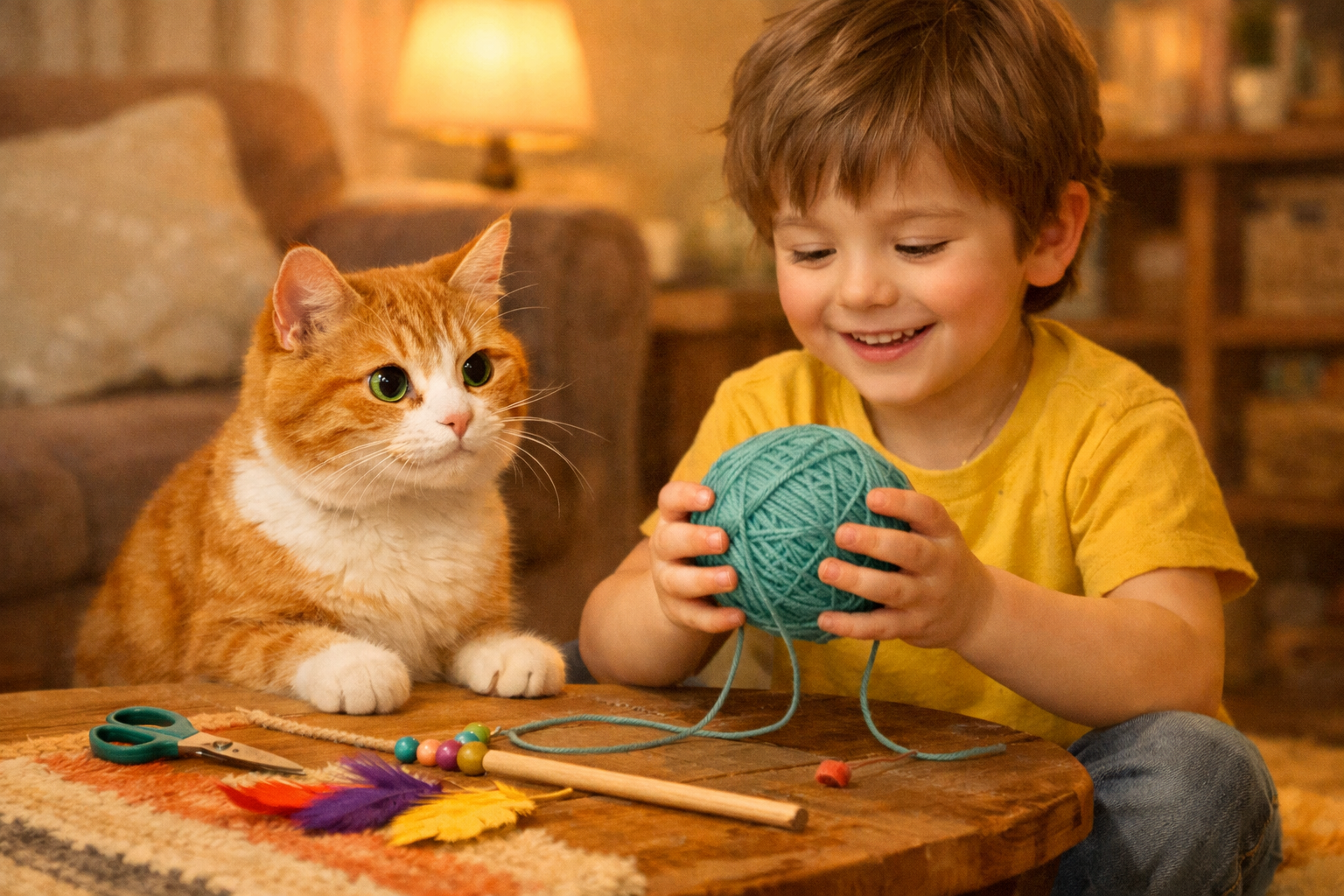
Many cats in Switzerland live mainly indoors - especially in winter or in apartment buildings. To keep them mentally occupied, they need a variety of activities, not just food and cuddles. Homemade cat toys are a simple, inexpensive and creative solution: you can use existing materials, involve children and adapt the toy exactly to your cat's temperament. At the same time, you retain control over safety and quality - an important point for responsible pet owners.
Table of contents ▼
- Why it makes sense to make your own cat toys
- Simple craft ideas from household materials
- Step by step: Making simple cat toys
- Typical mistakes - and how to avoid them
- When homemade toys are sufficient - and when they're not
- Conclusion: How to keep your cat occupied through play
- Frequently asked questions about making your own cat toys
- Homemade cat toys are inexpensive, individual and ideal for keeping indoor cats mentally occupied.
- Use safe materials without small parts that can be swallowed, sharp edges or toxic colors.
- Rotate a few, high-quality toys instead of leaving everything lying around all the time.
- Observe your cat: its play style determines which craft idea is actually used.
Why it makes sense to make your own cat toys
Homemade cat toys are worthwhile if you want to keep your cat busy but don't want to keep buying new products. Using simple materials such as cardboard, scraps of fabric or toilet rolls, you can create a variety of stimuli that appeal to hunting, searching and climbing behavior. At the same time, you can adapt the size, stability and level of difficulty to your cat's age, state of health and temperament - from active kittens to comfortable senior cats.
Particularly in Swiss homes with limited space or where cats are only kept indoors, useful toys are no substitute for outdoor play, but they do help to reduce boredom, weight gain and frustration. If you play together with your cat, you also strengthen the bond and recognize more quickly when behaviour or mobility changes - a plus point for health monitoring in everyday life.
Simple craft ideas from household materials
Simple craft ideas for cat toys can be made from materials that are available in almost every Swiss household: Cardboard boxes, paper, fabric scraps or empty toilet rolls. It is important that everything is stable, non-toxic and free of loose, swallowable parts. Ideally, you can build several different games from the same materials so that you can offer your cat something new on a regular basis without having to start from scratch every time.
Cardboard caves and tunnels
Cardboard boxes from online orders are ideal for hiding places and tunnels. Cut 2-3 openings of different sizes so that the cat can slip through or stick its paws out. Several boxes can be stacked to form a small labyrinth. Residential cats in apartment buildings in particular love such "retreat playgrounds" because they offer safety and play in one.
Toilet roll fumble boards
Place several empty loo rolls upright in a flat box, secure with paper and fill with dry food or individual treats - and you have a simple fumble board. The cat has to work with its paws and nose to reach the food. Adjust the difficulty: For beginners, only half-filled rolls, for professionals, put additional balls of paper in the rolls.
Cloth balls and hunting toys
You can make fabric balls from old cotton T-shirts or tea towels and fill them with a little paper to make a soft crackling sound. Use a long ribbon (without elastic) to make a simple hunting game: drag the ball across the floor or sofa and let the cat chase after it. Do not leave ribbons unattended after the game so that there is no risk of swallowing.
- Untreated cardboard without staples or sharp edges
- Cotton or linen fabrics without loose threads
- Paper (newspaper only in small quantities, wrapping paper is better)
- Wooden elements without splinters and without toxic varnish
- Empty, clean toilet rolls and kitchen paper rolls
Less suitable are shiny gift wrap, very thin ribbons, paper clips or anything that stains strongly. If you are unsure whether a material is safe, leave it out or only use it in parts that the cat cannot put directly in its mouth.
Step by step: making simple cat toys
A good beginner's project is a toilet roll tower: it is quick to build, inexpensive and encourages both movement and mental work. All you need is cardboard, loo rolls, scissors and some adhesive tape. These instructions are ideal for families with children or for pet owners who want to try out whether their cat will accept homemade toys without too much effort.
You will need a sturdy, flat cardboard box, 8-12 empty toilet rolls, scissors and adhesive tape. Cut the box so that the base and a low edge remain. Check that all the rolls are clean and free of any remaining paper.
Place the loo rolls close together in the box and secure them with adhesive tape or a thick blob of paper glue to prevent them from slipping away. Now fill some of the rolls with dry food or treats, leave others empty. First place the tower without food so that the cat can explore the new object.
As soon as your cat has understood the principle, you can put balls of paper or small pieces of fabric in the rolls so that he can no longer see the food directly. Gradually increase the difficulty and observe whether the cat remains motivated without becoming too frustrated.
For cats that prefer to hunt rather than puzzle, a home-made play stick is more suitable: a sturdy wooden stick with a wide fabric ribbon tied in a knot and a light fabric ball at the end. It is important that the stick is long enough to keep your hands out of reach of the claws - especially with very energetic animals.
Typical mistakes - and how to avoid them
There are three main mistakes when making your own cat toys: parts that are too small and can be swallowed, unintentional dangers such as loops or sharp edges and toys that are too complex and simply overwhelm the cat. Make sure that everything is sturdily built, loose strings are removed and toys with strings are never left lying around unattended. Simpler and safer is better than spectacular but risky.
Another mistake is to offer too much at once. If there are cardboard castles, balls and fiddly boards everywhere, the cat will quickly lose interest. It is better to have 2-3 toys in use and to change them weekly. This keeps everything more exciting and gives you the opportunity to dispose of worn-out items early on.
When making homemade cat toys, avoid using rubber bands, woolen threads and long strings without supervision. Such items can become wrapped around the paws or neck or, in the worst case, be swallowed and lead to an intestinal blockage. Always cut ribbons short and put them away after playtime.
A practical example: In a rented apartment in Zurich, a family made several fishing rods with thin wool for their resident cat. The cat loved the game - until it got a piece of thread and swallowed it. The result was an expensive visit to the vet. It was only after switching to wide fabric bands and consistent supervision that no more problems occurred. Small adjustments make all the difference here.
When homemade toys are sufficient - and when they are not
Homemade cat toys make sense if your cat is healthy, curious and generally playful and you have time to actively engage with it. For indoor-only cats, families with children and hobby owners in the country who keep cats indoors by the hour, it is a good addition to bought toys. It is crucial that the toy suits the animal's character and is varied regularly.
Homemade toys are less suitable if your cat has health problems, gets frustrated or over-excited very quickly or if you have little time for supervised play. In such cases, robust, tested intelligence toys or scratching furniture from specialist shops are often more durable and safer. A combination of DIY ideas and high-quality scratching boards or climbing elements offers many cats the best mix of safety and variety.
Combine home-made play ideas with sturdy scratching solutions to prevent your cat from using the sofa or door frame. You can find a selection of scratching posts, scratching garbage cans and scratching boards in well-stocked scratching furniture collections - ideal for complementing DIY projects.
Observe your cat over several days: Does she actively use the new toy, or does she ignore it? Does it seem happy and relaxed after playing or stressed and over-excited? Her reaction is the best indicator of whether your handicraft solutions are really doing her good or whether you should make adjustments - for example with simpler tasks, shorter play phases or opportunities to retreat after the romp.
Conclusion: How to keep your cat playfully occupied
Start with one or two simple DIY toys such as cardboard caves or a fiddly tower made of toilet rolls and test what your cat likes to use. Always make sure they are safe: no loose strings, no small parts that can be swallowed, no unattended ribbons. Rotate the toys regularly, combine craft ideas with stable scratching and climbing opportunities and consciously plan play times together. In this way, you can ensure that your cat is mentally challenged, physically active and completely satisfied in your home, farmhouse or hutch with a manageable amount of effort.
Frequently asked questions about making your own cat toys
How often should I play with my cat with homemade toys?
For most cats, two to three short play sequences per day, 5-10 minutes each, make sense. The important thing is quality rather than duration: it is better to let your cat chase, climb or search in a concentrated manner and then consciously stop before it gets too excited. Older or overweight animals benefit from several very short sessions throughout the day - for example in the morning before feeding, in the afternoon and in the evening.
At what point is a homemade cat toy no longer safe?
As soon as cardboard becomes very soft, fabric frays, knots come loose or individual parts wobble, you should replace the toy. Check your DIY toys at least once a week: pull on them carefully, twist connections and check whether any adhesive tape or staples are exposed. If in doubt, always dispose of them - the cost of new craft materials is much lower than an emergency visit to the vet.
Are homemade toys also suitable for farm or barn cats?
Yes, but with a different focus. Farm and stable cats often hunt mice anyway and move around a lot. Here it is less about exercise and more about bonding and building trust. Simple fumbling games with food in the barn or short hunting games away from machines and vehicles help to get the animals used to people and make it easier to catch or examine them if necessary.
How do I motivate a sluggish or fearful cat to play?
Start with very simple, slow movements and few distractions in the room. Instead of wild hunting games, quiet search games often work for anxious or comfortable cats: Hide treats in cardboard openings or under paper, let the cat sniff and scratch. Keep the sessions short and positive, without pressure. Many animals barely thaw out in the first few days, but become increasingly confident and active after a few weeks.
Can I include catnip or valerian in homemade toys?
Yes, in large quantities, as long as your cat tolerates the scents. A small bag of dense fabric with some dried catnip or valerian root can be very attractive. Not every cat reacts in the same way, some get very excited. Therefore, only offer such toys occasionally and keep them airtight in between so that the scent does not evaporate.
How can I be considerate of my neighbors in an apartment building?
Avoid loud rattles or rolling hard plastic balls late at night, especially on parquet or stone floors. Soft fabric balls, fiddle boards and cardboard caves are much quieter. Plan intensive racing and jumping games in the early evening and offer quieter activities at night, for example treat search games in balls of paper or boxes placed on carpet.