Cleaning the chicken coop: How to keep the coop hygienic and clean
A clean chicken coop is the basis for healthy animals, good egg quality and a pleasant environment for humans and animals. Regularly cleaning the henhouse prevents diseases, reduces parasites such as mites and fleas and prevents unpleasant odors, which can quickly lead to conflicts with neighbors, even in densely populated communities. Especially in Switzerland, where the Animal Welfare Ordinance (TSchV) and FSVO technical information define minimum requirements for animal welfare and house management - such as dry, loose and regularly replaced litter - conscientious house hygiene is part of responsible chicken keeping - whether in the garden of a young family, on a farm or in a community project in the neighborhood.
TL;DR - The most important facts about cleaning the chicken coop in a nutshell
- Practical guideline: Manage litter so that it remains dry/loose and is replaced regularly; remove manure areas frequently depending on how dirty they are.
- Daily removal of manure boards and heavily soiled litter significantly reduces ammonia levels, moisture and disease pressure.
- Dryness, good ventilation and suitable litter (e.g. wood shavings, straw pellets) are crucial for keeping the henhouse hygienic and clean.
- A systematic sequence - from rough mucking out to damp cleaning and disinfection - saves time and ensures sustainable coop hygiene.
- Parasite prevention (e.g. against red mite) is an integral part of the cleaning schedule and should be intensified, especially in the summer months.
- Depending on the canton/municipality, additional regulations (e.g. on waste disposal/water protection/emissions) may be relevant.
Why is a clean chicken coop so important for health?
Consistent cleaning of the chicken coop is far more than just a question of appearance. It has a direct impact on the health of the animals, their exposure to pathogens and the lifespan of the henhouse equipment. Germs, fungi and parasites multiply particularly quickly in droppings, damp litter and dirty drinkers. High ammonia levels in the air irritate the respiratory tract and mucous membranes, which increases susceptibility to respiratory diseases. Cleanliness, dryness and a well thought-out ventilation concept in the henhouse therefore ensure a robust immune system and greater well-being in the flock.
Especially in hobby farming, it is often underestimated how closely coop hygiene is linked to typical problems such as diarrhea, inflammation of the laying intestines or infestation with the red bird mite. A chicken coop that is cleaned and checked regularly helps to avoid outbreaks of disease and the associated veterinary costs (orientation value: significantly higher burden if hygiene is neglected). In addition, a clean coop improves egg hygiene, reduces soiling on the shell and thus also the risk of germs penetrating into the egg.
How often should a henhouse be cleaned?
Orientation values for cleaning intervals in practice
The optimum frequency for cleaning the henhouse depends on factors such as the number of animals, the size of the henhouse, the type of litter, the climate and the opportunities for exercise. As a rough guide, manure boards and heavily soiled areas should be checked and cleaned daily and the entire coop should be thoroughly mucked out frequently (often weekly). In wet periods, with high humidity or if many animals are kept in a confined space, an interval of three to five days may be useful to keep the germ load low.
In professional farms, barn hygiene is often adapted to production cycles; thorough cleaning and - depending on the situation - disinfection are common between herds. Hobby farmers can use this as a guide by planning a particularly thorough basic cleaning at least once or twice a year with complete disposal of the bedding, cleaning of all surfaces and targeted parasite prophylaxis.
How does a thorough cleaning of the chicken coop work step by step?
Preparation: occupational safety and organization
All the necessary tools should be ready before cleaning begins: Shovel, broom, bucket, scrubbing brush, possibly high-pressure cleaner (depending on the coop), gloves, dust mask and suitable cleaning agents. New bedding and, if necessary, parasite control agents are also prepared so that the hen house is ready for occupancy immediately after cleaning.
For your own protection, it is advisable to wear an FFP2 or comparable dust mask, especially in older coops with a lot of dry litter and manure dust. Eye and skin contact with cleaning agents should be avoided. During intensive cleaning, the chickens should be kept in the exercise area if possible or temporarily moved to a clean alternative barn to minimize stress and avoid exposing them to dust.
Rough cleaning: Mucking out and removing droppings

The first step in keeping the henhouse clean is to muck out thoroughly. All droppings boards are emptied, the litter is removed from the floor area and nests and heavily soiled perches or corners are carefully scraped off. Stubborn droppings can be removed with a spatula or scraper. All organic waste can - depending on cantonal regulations - be disposed of via the waste disposal site, green waste collection or controlled composting.
It is worth consciously observing the droppings and litter: Discoloration, increased diarrhea or a noticeable odor can indicate health problems in the flock at an early stage. Finding mite nests, traces of feathers or an unusually high number of eggs under perches can also provide information on how the hen house can be better structured or cleaned in future.
Damp cleaning and disinfection of the chicken coop
After mucking out, all surfaces should be damp-cleaned. Smooth materials such as plastic or coated wood can be cleaned well with warm water and a mild detergent. In professional stables, foam cleaners are often used to dissolve organic material, which is then rinsed off. A high-pressure cleaner can be helpful, but should be used with caution and only on stable masonry or concrete to prevent damage to sensitive components.
Only when all visible dirt has been removed does it make sense to use a disinfectant. Products that are expressly approved for poultry farming are dosed and applied according to the manufacturer's instructions. Depending on the product, surfaces must be left to act for a certain period of time before being rinsed or dried again. In many Swiss cantons, animal health services also recommend using disinfectants specifically after cases of illness and when changing flocks, while the focus in routine operations is on mechanical cleaning and drying.
Drying, new litter and structuring the barn
Complete drying after wet cleaning is a crucial step in keeping the henhouse hygienic and clean. Damp surfaces promote mold growth and mite infestation. Where possible, doors and windows should be left open to create a draught without the animals standing in the draught. In cooler seasons, a mobile fan heater with a timer (in compliance with all fire safety regulations) can speed up the drying process.
New bedding is only applied to a dry floor. Depending on the barn concept, wood shavings, straw pellets, chopped straw or a combination of these materials can be used. Soft materials such as spelt husk or fine straw are often used in laying nests to cushion the eggs and minimize soiling. On many Swiss farms, a slightly thicker bedding carpet (approx. 5-10 cm) has proven its worth, as it binds moisture and allows the chickens to scratch around.
What role do house climate, ventilation and litter play in hygiene?
House climate and ammonia contamination in the henhouse
The climate in the barn is a key factor for animal health and barn hygiene. High humidity and inadequate ventilation mean that ammonia is less easily removed from the manure. Even at comparatively low concentrations, humans complain of a pungent odor; for chickens, chronically high levels can lead to irritated mucous membranes, eye inflammation and respiratory problems.
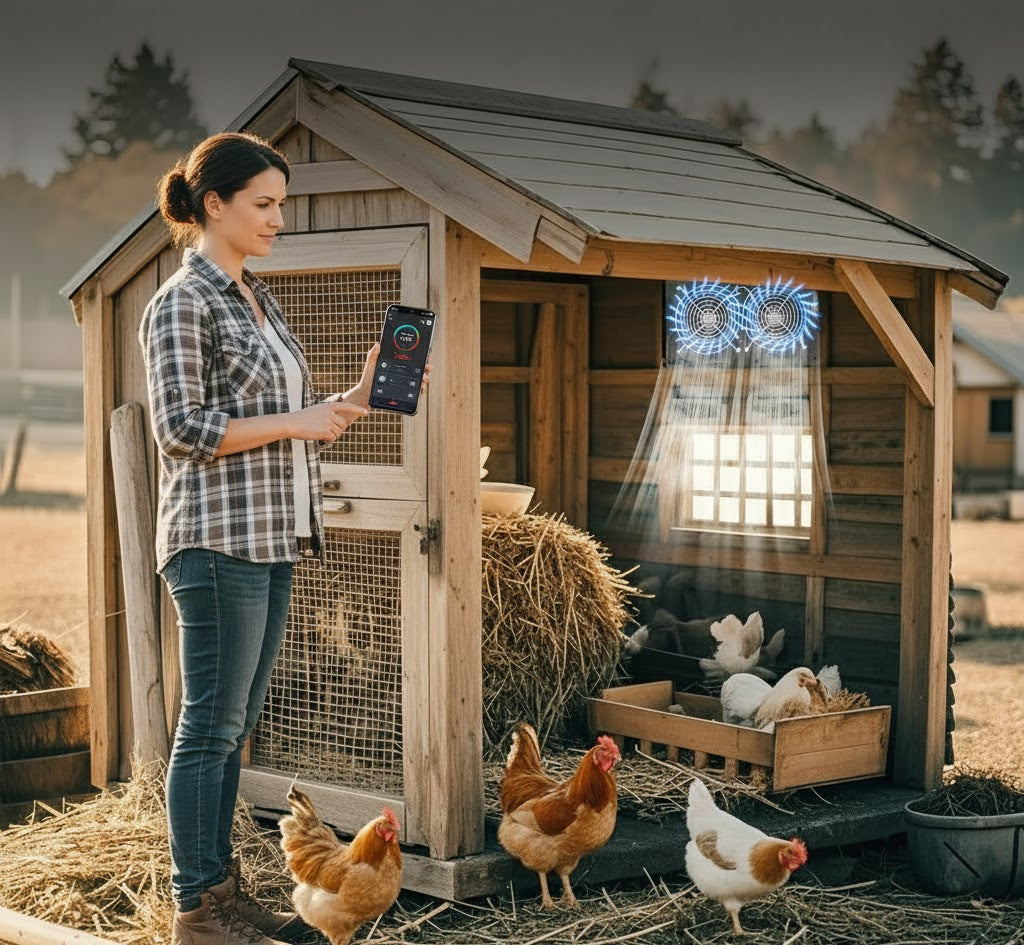
In practice, a good climate in a henhouse is characterized by the fact that the henhouse smells of the animal and litter, but is not acrid or pungent. Misted windows, damp walls or constantly wet litter indicate ventilation problems. Ventilation openings should be positioned so that fresh air can flow in at the top and stale air can escape without causing draughts on perches or in the resting area. Some modern small and mobile stables work with automatic flaps or fans that keep the climate stable.
For a more comfortable climate, Sanilu offers chicken coops with automated systems: With the Powerbox, a solar-powered coop climate manager, the ventilation can be regulated automatically, and lighting and other components can also be controlled via app. Using a free smartphone app, you can conveniently set the fan speed, lighting and other options - independently of the mains power and directly via your mobile device.
Bedding types in comparison: hygiene, comfort and effort
The choice of litter has a significant influence on how easy it is to clean the chicken coop and how hygienic the coop environment remains. Absorbency, dust formation, compostability and availability in the respective region or municipality are important. Various types of litter have become established in Switzerland, which vary in suitability depending on the size of the farm and the housing system.
How can the chicken coop be hygienically protected against mites and other parasites?
Recognize typical parasites in the chicken coop
Despite good cleaning, a chicken coop can be infested by parasites such as the red mite, feather lice, fleas or worms. The red mite in particular hides in cracks, crevices, under perches or behind coverings during the day and infests the chickens mainly at night. Indications of infestation are restlessness on the roost, pale combs due to blood loss, reduced laying performance and visible small red or gray dots on perches and walls.
Neglected barn hygiene significantly increases the risk of severe parasite infestations. In such cases, it may be necessary to empty the entire henhouse, clean it thoroughly, wash it out with hot water or burn it out (only in suitable buildings) and then use targeted control agents. This effort can usually be significantly reduced through consistent prevention and regular inspections.
Prevention: cleanliness, dust baths and suitable materials
- 1 Regular cleaning of perches, droppings boards and nests removes important hiding places for mites and other parasites. Smooth, rounded edges are easier to clean than raw, cracked wood.
- 2 A dry area with sand or fine soil as a dust bath supports the chickens' natural plumage care. If necessary, suitable mineral additives can be integrated there to make parasite infestation more difficult.
- 3 Diatomaceous earth or other physically active agents can be used in areas that are particularly at risk, such as the perch stores or cracks. They must be checked after cleaning and renewed if necessary.
- 4 A structured henhouse with clearly separated areas for eating, sleeping and laying makes it easier to check for parasites and reduces stress among the animals.
What mistakes should be avoided when cleaning the coop?
Typical challenges with regularity
One of the most common mistakes is to start cleaning the henhouse when the smell is already strong or the litter is visibly soaked. The effort is then much greater and the animals have already been exposed to increased germ and ammonia levels for a long time. A fixed cleaning schedule with clear intervals helps to structure the work and avoid overload peaks.
Another mistake is the inappropriate use of disinfectants. If they are used too frequently, at too high a dose or on surfaces that are still very dirty, not only is their effectiveness impaired, but the material and the health of the animals may also suffer. It is also important that chickens only return to the coop after disinfection when surfaces are dry and residues have been removed in accordance with the manufacturer's instructions. Forgetting about feed and water hygiene can also quickly lead to problems: Even a perfectly cleaned chicken coop will not remain hygienic if drinking troughs become dirty or feed residues become old and moldy.
Advantages of a well-cleaned chicken coop at a glance
- Significantly lower disease pressure and more stable laying performance.
- Better air quality, less odor nuisance for the coop and the neighborhood.
- Fewer parasite infestations, especially red bird mites.
- Longer lifespan of the house equipment and lower maintenance costs (approx. long-term).
- A chicken coop that is hygienic and clean complies better with the requirements of the TSchV and makes any inspections easier.
Conclusion: Clean the henhouse systematically and keep it hygienic in the long term
A chicken coop that is cleaned consistently forms the basis for healthy animals, clean eggs and good coexistence between humans and animals in the neighborhood or on the farm. The decisive factor is not just the occasional basic cleaning, but a well thought-out overall concept: daily small jobs, regular checks, suitable litter, a good barn climate and targeted parasite prophylaxis all work together. Establishing routine procedures ensures that the henhouse remains hygienic and clean all year round - from the small family henhouse in the garden to professional poultry farming in the canton.
Sensible recommendations for action include a fixed cleaning schedule, a smart choice of materials when building the coop and close adherence to the requirements of the Animal Welfare Ordinance (TSchV). In this way, animal welfare as well as workload and costs can be kept in balance in the long term.