

Cleaning your dog's teeth: how to keep your four-legged friend's mouth healthy
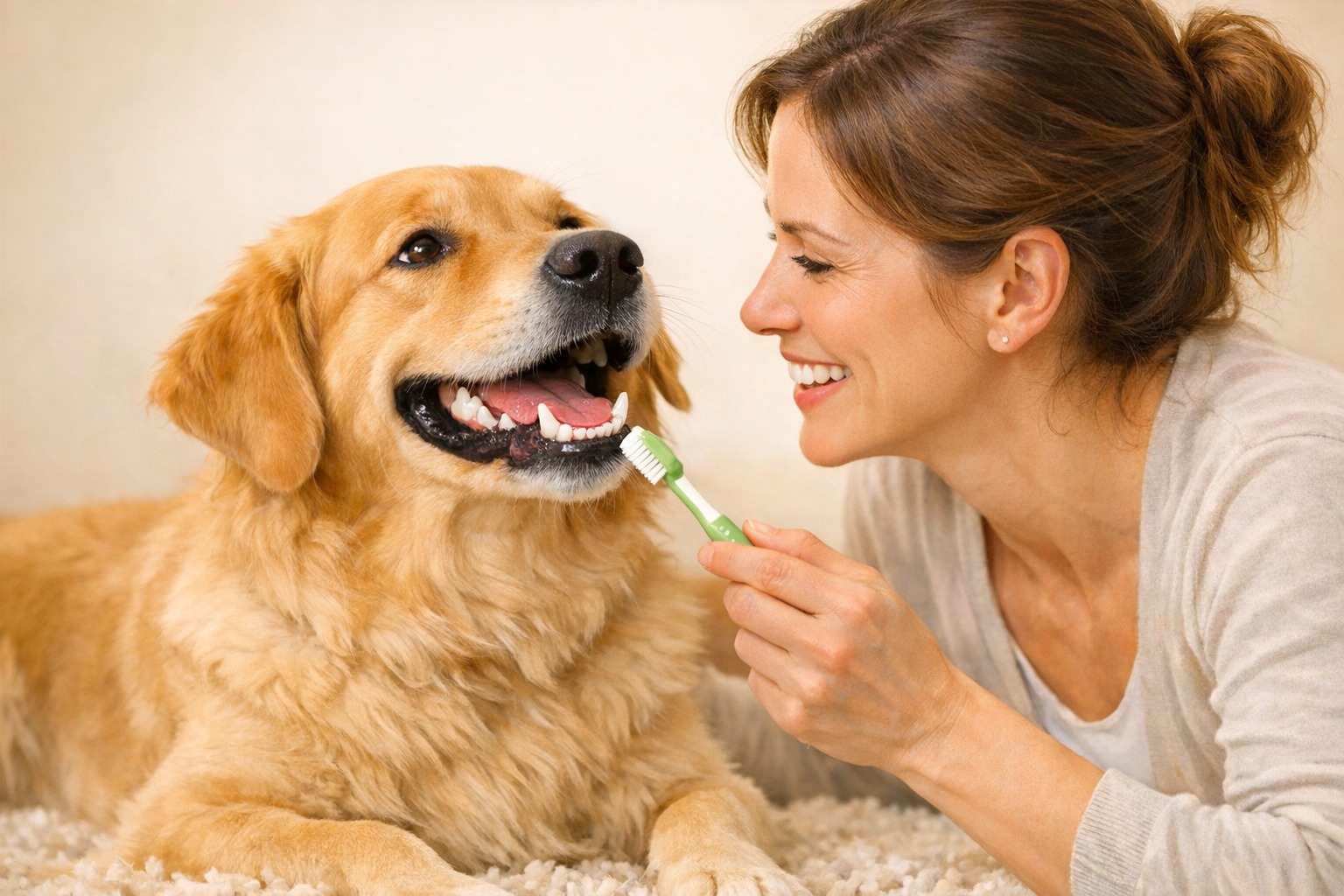
Many dog owners underestimate the extent to which dental disease can affect their four-legged friend's quality of life - from bad mouth odor to painful inflammation and organ damage. Especially in Switzerland, where dogs are closely integrated into everyday family life, a healthy mouth is crucial for a long, active life. In this guide, you will learn how to care for your dog's teeth in a practical way, which methods really make a difference, where typical mistakes lurk and in which situations professional teeth cleaning at the vet is essential.
Table of contents ▼
- Why teeth cleaning is so important for dogs
- What does good dental cleaning for dogs at home look like?
- Professional teeth cleaning at the vet
- Decision-making aid: Which dental cleaning for which dog?
- Common mistakes in dental care for dogs
- Conclusion: How to keep your dog's teeth healthy in the long term
- Frequently asked questions about dental cleaning in dogs
- Brushing your dog's teeth daily or at least several times a week is the most effective way to clean your dog's teeth.
- Professional teeth cleaning under anesthesia is necessary if tartar, inflammation or pain is already visible.
- Snacks and chews can help, but can never replace mechanical cleaning with a brush.
- Regular mouth checks at home and annual check-ups at the vet prevent painful long-term consequences.
Why dental cleaning is so important for dogs
Cleaning a dog's teeth primarily prevents painful inflammation, tooth loss and secondary diseases of the heart, liver and kidneys. From the age of three, many dogs have noticeable dental plaque and bad breath. If plaque is not removed regularly, it hardens into tartar under which bacteria can multiply undisturbed. This causes periodontitis, loose teeth and lasting pain - even if your dog hides it well.
Typical warning signs are bad mouth odor, yellow-brown plaque, red or bleeding gums, one-sided chewing or sudden refusal of harder food. Small breeds, brachycephalic dogs (e.g. pugs, French bulldogs) and older animals are affected more frequently than average in Switzerland. If you start early with consistent teeth cleaning, you will not only save your dog pain, but often also expensive dental operations.
- Distinct mouth odor that remains even after changing food
- Yellowish or brown plaque on the molars and canines
- Reddish seam on the gums, occasional bleeding when chewing
- Dog does not like to be touched at the mouth or snaps away
- Changed eating behavior, dropping food, chewing on one side only
Take these signs seriously and have your pet checked by a vet at an early stage. In Switzerland, a thorough mouth examination is already included in the annual check-up at many practices - make sure you take advantage of this.
What does a good dental cleaning for dogs at home look like?
Effective dental cleaning for dogs at home consists of regular brushing with a dog toothbrush and suitable toothpaste, supplemented by useful chewing articles. Ideally, you should brush daily, but at least three to four times a week. This will remove fresh plaque before hard tartar builds up. It is important to practise slowly, only use products that are suitable for dogs and have any pain consistently checked instead of simply scrubbing harder.
Step-by-step: Building up your dog's teeth brushing routine
Briefly stroke your dog's lips and the corners of his mouth several times a day and reward him immediately. Increase slowly until you can briefly touch the teeth and gums with a finger without brushing.
Offer dog-safe toothpaste like a treat to lick. Only when your dog likes the taste do you dab a small amount onto the outer surfaces of the molars with your finger.
Use a soft dog toothbrush or finger brush and only clean a few teeth in small circular movements at first. Slowly increase the duration and number of teeth over a period of days.
Integrate brushing into a fixed daily routine, for example in the evening after a walk. Short, positively completed sequences are more effective than infrequent, long bouts.
Never use human toothpaste - many contain xylitol or fluoride in concentrations that can be problematic for dogs. Dog toothpastes are formulated in flavors that animals accept (e.g. poultry), encouraging participation rather than repulsion.
Useful additions: Chews, toys & co.
In addition to the toothbrush, chewable items can help to mechanically reduce soft plaque and stimulate salivation. For example, natural hides, dried cowhide or special dental chews with a dental test are suitable. On the other hand, objects that are too hard, such as stones, hardwood or antler splinters, increase the risk of tooth fractures - especially for ambitious "permanent chewers".
For households with several animals or in stable environments, a good hygiene routine for bowls, toys and lying areas is worthwhile. Special cleaning products, such as those offered in the category for hygienic animal environments, make it easier to regularly clean boxes, kennels and small animal dwellings and reduce germ-related mouth problems.
Have a small toothbrushing set ready: Dog toothbrush, toothpaste, a microfiber cloth and a few, well-tolerated chews. If everything is to hand, it is much easier to remain consistent in everyday life - especially in hectic families or on the farm.
In apartment buildings, it is worth having a quiet, fixed place for brushing teeth so that your dog is not distracted by children's noise or stairwell activity. Short, relaxed sessions ensure better cooperation than a stressful "big fight".
Professional teeth cleaning at the vet
Professional teeth cleaning for dogs is always carried out under general anesthetic. This is the only way the vet can thoroughly clean all tooth surfaces - including the insides and gum pockets - with ultrasound, assess loose teeth and treat painful foci. For healthy dogs that are regularly cared for at home, an interval of one to three years is usually recommended; shorter intervals may be appropriate for small breeds or animals with pre-existing conditions.
Before anesthesia, a general examination is carried out, usually supplemented by blood tests and possibly other checks in the case of older or previously affected dogs. The dog is then intubated, monitored and the teeth are cleaned of tartar, polished and x-rayed if necessary. The vet then decides whether teeth need to be extracted or other procedures performed. After waking up, the dog remains under observation until it can stand and swallow safely again.
In Switzerland, the requirements of the Animal Welfare Ordinance (TSchV) apply: Interventions may only be carried out by specialists, and anesthesia, pain management and aftercare must be in the best interests of the animal. Don't be afraid to ask about monitoring, anesthesia protocol and the practice's experience - a reputable company will explain this to you transparently.
When is professional teeth cleaning absolutely necessary?
- Clearly visible brown tartar, especially on the canines and molars
- Red, swollen or bleeding gums, purulent discharge
- Wobbly or already missing teeth
- Strong, new mouth odor
- Refusal to eat, head tilted when chewing, howling when eating or playing
In these situations, home care is no longer enough. Attempts to "scrape away" solid tartar often lead to injuries and make cleaning the mouth even more difficult in the future.
Decision-making aid: Which dental cleaning for which dog?
The type of dental cleaning that makes sense for your dog depends on age, breed, state of health and your living situation. As a general rule, daily brushing is desirable for all dogs, but not always immediately realistic. In young, healthy dogs, the aim is to prevent tartar from forming in the first place. For older animals with existing problems, the first priority is professional restoration, followed by maintenance care at home.
Regular tooth brushing is ideal for cooperative dogs that have no major pain in their mouths. Families with stable daily routines, dog owners with a little time and patience and young dogs from the change of teeth onwards benefit in particular. Supplementary chews and dental care snacks are a useful plus here, but not the main measure.
In the case of severe tartar, inflammation, loose teeth or poor general health, a professional dental cleaning should be carried out first. This applies in particular to small breeds, older farm dogs, rescued dogs from abroad or animals with an unclear history. Only when the mouth is pain-free is it worth carefully establishing a domestic cleaning routine.
For particularly anxious dogs or owners with little strength, it can be useful to combine training with a dog trainer. In rural areas, where dogs are often kept outside, dental pain is sometimes overlooked for longer - here, farmers should consciously have their dog's mouth and teeth checked at least once a year, even if the dog is "still eating well".
Common mistakes in dog dental care
Many problems do not arise from bad intentions, but from well-intentioned but incomplete information. Knowing the typical mistakes can save you and your dog a lot of stress.
Mistakes that you should avoid
- Only relying on chews: Even good snacks are no substitute for a brush - plaque remains, especially on the molars.
- Acting too late: If you only react when you have a strong bad breath, painful periodontitis is often already present.
- Hard objects: Stones, pieces of antler or very hard wood repeatedly lead to tooth fractures.
- Rough "scrubbing" in case of pain: If the dog struggles strongly, there is often already a problem behind it - then it belongs in the practice, not under more pressure.
- Use human toothpaste: This is not designed for dogs and may contain ingredients that they should not swallow.
Plan small, achievable steps rather than aiming to "brush perfectly every day from now on". In practice, it works better to define a realistic goal - such as three times a week - and stick to it consistently. Anything more than that is a bonus.
Conclusion: How to keep your dog's teeth healthy in the long term
Start early with mouth training and gradually build up your dog's teeth brushing - ideally daily, at least several times a week. Use chews and dental care snacks as a supplement, not as a replacement for the brush. Check your dog's mouth regularly yourself and have it checked by a vet at least once a year, or earlier if tartar or signs of inflammation are visible. In this way, you can combine consistent home care with targeted professional teeth cleaning and ensure that your four-legged friend has a healthy, pain-free mouth into old age.