Guinea pigs or rabbits? The big comparison
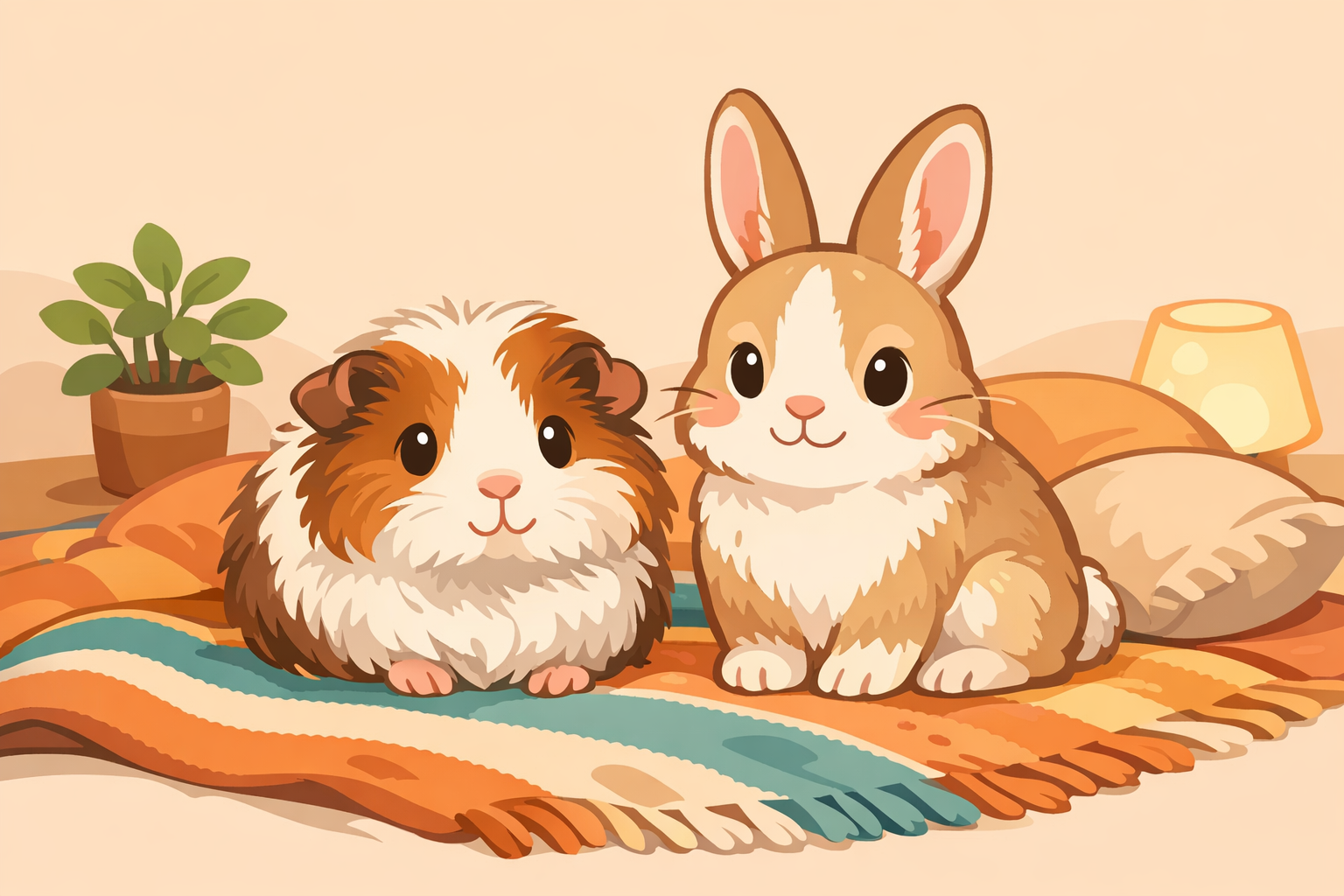
Would you like to keep small animals and are hesitating between guinea pigs and rabbits? Both species appear similar at first glance, but differ significantly in terms of space requirements, behavior, costs and everyday requirements. This guide provides you with a practical decision-making aid with a view to Swiss husbandry conditions - including information on animal welfare regulations, the space available in the home or garden and the running costs. This will enable you to make an informed decision about which animal species really suits your situation.
Table of contents ▼
- Basic differences between guinea pigs and rabbits
- Housing and space requirements in everyday life in Switzerland
- Comparison of costs and time required
- Decision guide: Which animal suits whom?
- Common mistakes with guinea pigs and rabbits
- Conclusion: How to make the right choice
- Frequently asked questions about guinea pigs and rabbits
- Guinea pigs are quieter, need less exercise, but are very sensitive to noise and don't like being lifted.
- Rabbits need considerably more space, exercise and activity, but often provide more interaction and fun to watch.
- In Switzerland, group housing, minimum areas and protection from the weather are prescribed by law - indoor mini cages are not appropriate for animals.
- The choice should be based on space, time budget, child age and financial reserves for veterinary costs, not just on appearance.
Basic differences between guinea pigs and rabbits
Guinea pigs or rabbits - the better choice depends on temperament, space and your expectations. Guinea pigs are more ground-oriented, shy and communicate a lot through vocalizations, while rabbits are more curious, eager to jump and often more interested in their surroundings. Both are group animals and may not be kept individually according to Swiss animal welfare regulations. The important question is therefore not so much "Which species is better?", but rather: Which species is better suited to your everyday life and living situation.
Guinea pigs are usually smaller, more compact and have less pronounced jumping behavior. They tend to run close to the ground and like to hide. Rabbits can jump up, dig and actively use levels. This affects both enclosure planning and safety, especially in the garden. In addition, digestion, food quantity and veterinary needs, such as vaccinations, differ significantly.
- Calmer, often less eager to climb and jump
- Communicate with squeaks, growls and whistles
- Like physical contact on the ground, but do not like to be lifted up
- Very susceptible to stress from noise and hectic handling
- Active, with a strong urge to move and jump
- Show a lot of body language (hooking, knocking)
- Can get used to people well with patience in some cases
- Need a structured, varied environment
Important: Neither species are "starter toys" for children. They need consistent, calm care from adults and an attitude that does justice to their natural behavior - otherwise health problems and behavioral disorders are inevitable.
Housing and space requirements in everyday life in Switzerland
 The following applies to guinea pigs and rabbits in Switzerland: the cage is at most a sleeping and protection zone, not a full living space. The Animal Welfare Ordinance stipulates minimum areas depending on the number of animals and their weight, and in practice, significantly larger areas with a permanent run have proven their worth. In principle, rabbits need more space than guinea pigs, especially at height, as they jump and make hooks. In rented apartments, balcony solutions with weather-protected enclosures are a common option, provided that neighbors and landlords agree.
For a small group of guinea pigs, a spacious indoor enclosure or a sheltered outdoor hutch with a structured run is ideal. For rabbits, a securely fenced garden or exercise area where they can run, jump and dig is ideal. In apartment buildings, attention must also be paid to noise (squeaking, scratching), smell and the location of the enclosure - for example, no strong-smelling outdoor toilet directly under the neighbors' bedroom window.
- Do I have a fixed location for a large enclosure all year round (not just a cage)?
- Is the area protected from rain, draughts and summer heat (roof, shade, insulation)?
- Can I provide at least 6-8 m² of exercise area for two rabbits or 4-6 m² for guinea pigs?
- Is there electricity and water nearby for heating and cleaning in winter?
- Are neighbors possibly affected by noise or smell - and informed?
Stable small animal pens and runs make it much easier to keep them in a species-appropriate environment. High-quality outdoor hutches or combined hutch and run solutions are not only more animal-friendly in the long term, but also more practical to clean and secure than improvised mesh constructions.
Comparison of costs and time required
Initially, guinea pigs are usually slightly cheaper than rabbits, mainly because they need less space and food. For two guinea pigs, you can expect slightly cheaper initial equipment and lower running costs than for two rabbits. Rabbits generally incur higher annual costs due to their higher food requirements, larger hutches and frequent vaccinations. In the event of illness, both types of animal can quickly cost three-figure sums per visit to the vet - a small cushion is essential.
In terms of time, guinea pigs need around 20-30 minutes a day for feeding, checking and selective cleaning, while rabbits need 30-45 minutes, as their exercise area should be organized and checked more intensively. Weekly major cleaning of the hutch and run also takes around 30-60 minutes, regardless of the species. If you work a lot or have irregular working hours, you should honestly plan for the additional expense of rabbit runs and activities.
List the hutch, run, furniture, transport box, food supplies and first vet check separately. Expect larger enclosures and higher start-up costs for rabbits than for guinea pigs.
Plan for food, hay, bedding, cleaning products, vaccinations (especially for rabbits) and a contingency for unexpected visits to the vet. This will show you whether your budget fits the type of animal you have chosen.
Make a note of how much time is realistically available in the mornings and evenings. Take vacation replacements and weekends into account - small animals need care and supervision 365 days a year.
Solid, easily accessible stables that can be cleaned quickly, for example with removable floors or large doors, have proven to be practical. This saves a lot of time over the years and is easy on the back - especially with larger outdoor enclosures for rabbits.
Decision guide: Which animal suits whom?
 There are four questions that help you decide whether guinea pigs or rabbits are better suited: How much space do I have permanently? How much daily time is available? How old are the children in the household? And how stable is my budget for unexpected veterinary costs? If you have less space but a quiet household, you are often better off with guinea pigs. If you have a secure garden, enjoy watching active animals and are not afraid of a little more effort, rabbits are often a good choice.
Guinea pigs are usually more suitable for families with younger children because they are smaller, less jumpy and easier to handle when in contact with the ground. However, it is important that adults take the main responsibility and that children learn that guinea pigs are not cuddly toys to be carried around all the time. Rabbits can be very exciting for older, quieter children and adults if their great urge to move is taken into account and a large, structured run is available.
Before making a decision, visit a Swiss small animal farm, an animal shelter or a foster home and observe a group of guinea pigs and a group of rabbits for half an hour. You will quickly notice which behavior appeals to you more in everyday life - and whether the level of activity suits your living situation.
Both species are unsuitable if you only have a small room, a classic cage without an outdoor run or hardly any time. In such cases, other types of pets or doing without are the more animal-friendly option. Alternatively, you can choose a well-equipped indoor enclosure and, if space is limited, consider a group of guinea pigs rather than large rabbit breeds.
Common mistakes with guinea pigs and rabbits
Many problems are not caused by "the wrong species", but by typical husbandry mistakes. These include single housing, cages that are too small, a lack of protection from the weather in the Swiss winter, the wrong food and restless handling - especially in households with small children. Avoiding these issues from the outset will save you vet costs and frustration and allow the animals to live a much longer, healthier life.
Another common mistake is underestimating the gnawing and burrowing instinct. Rabbits can damage carpets, cables and furniture in the home if the run is not secured. Guinea pigs suffer if they are kept in noisy living areas without a place to retreat to - for example, right next to televisions or loudspeakers. Summer is also often underestimated: both species tolerate heat poorly, which is why shade, good ventilation and, in extreme cases, cooling facilities are necessary.
Guinea pigs and rabbits should not be kept together in the same group. Their communication is very different, rabbits are physically superior and guinea pigs are often suppressed or injured in mixed groups. It is better to keep them in single-species groups with at least two animals of the same species.
Avoiding mistakes also means taking the Swiss weather seriously: Outdoor housing in winter only makes sense with well-insulated, draught-protected hutches, dry bedding and frost-free water. At the same time, there must be sufficient shade in summer - direct blazing sun can be dangerous for small animals within a short space of time.
Conclusion: How to make the right choice
Always make your decision for guinea pigs or rabbits based on the general conditions: If you have limited space, but a quiet household and enjoy quiet observation, guinea pigs are usually better suited. If, on the other hand, you have a well-secured garden, sufficient time for enclosure maintenance and activity and like very active animals, rabbits are an exciting choice. Be open about your budget, plan your space and time realistically - and then make a conscious decision for the species whose needs you can reliably meet for years to come.